|
Marine Ecologist & Program Coordinator Wildlife Conservation Society (WCS) Western Indian Ocean & Co-Director of SMART Seas Africa Program SMART Seas Africa Program (click link for more info) email: [email protected] twitter: @JeniOLeary Phone: 805-756-5389 Link to my CV |
Research & Programmatic Interests
I am currently focusing on marine spatial planning and developing a improving MPA and community fisheries management across three nations in the Western Indian Ocean (Kenya, Tanzania, and Madagascar) and collaborating with partners to develop sustainability strategies for these efforts through blue carbon.
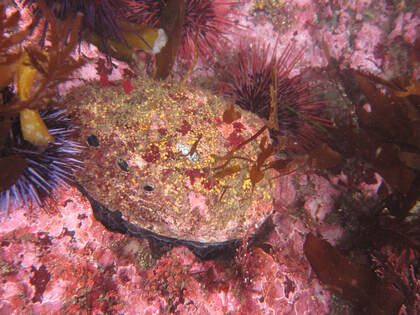
My research focuses on how human disturbance and environmental variability affect persistence and recovery of marine systems, and how we can manage complex systems for long term sustainability. I have worked for over 20 years designing research projects to address conservation challenges in the western U.S.A kelp forests, coastal East Africa, and in Pacific Islands. I use a combination of research tools including field studies, laboratory studies involving genetics, and meta-analytic studies. I work closely with managers and communities to develop ways to integrate science and conservation and develop new scientific tools that facilitate management of marine resources. Recent research projects I have led include evaluation of causes and consequences of eelgrass decline in California, abalone recruitment in a changing climate, and the effects of seastar wasting disease on intertidal communities. For other research, see my publications (tabs above).
I am currently focusing on marine spatial planning and developing a improving MPA and community fisheries management across three nations in the Western Indian Ocean (Kenya, Tanzania, and Madagascar) and collaborating with partners to develop sustainability strategies for these efforts through blue carbon.
My research focuses on how human disturbance and environmental variability affect persistence and recovery of marine systems, and how we can manage complex systems for long term sustainability. I have worked for over 20 years designing research projects to address conservation challenges in the western U.S.A kelp forests, coastal East Africa, and in Pacific Islands. I use a combination of research tools including field studies, laboratory studies involving genetics, and meta-analytic studies. I work closely with managers and communities to develop ways to integrate science and conservation and develop new scientific tools that facilitate management of marine resources. Recent research projects I have led include evaluation of causes and consequences of eelgrass decline in California, abalone recruitment in a changing climate, and the effects of seastar wasting disease on intertidal communities. For other research, see my publications (tabs above).
|
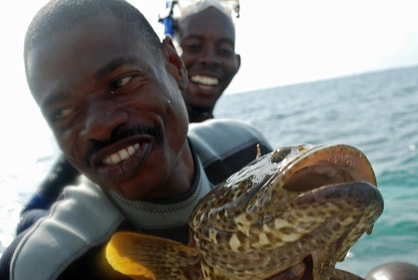
I am the co-director of the SMART Seas Program in East Africa (see our website). Through this program, I am working nationally with the Kenya Wildlife Service (KWS), Tanzania Parks Authority, and Seychelles National Parks Authority to help managers and fishing communities use data to make proactive management decisions and ensure that MPAs and fished reefs are socially and ecologically resilient. In the next year, with United Nations Funding, we will be holding a certification of trainers to facilitate growth of this successful approach to marine governance across other Western Indian Ocean nations.
Follow the program on Twitter @SMARTseas or visit our webpage at http:smartseas.org |
|
Previous Professional ExperienceAs a faculty at California State Polytechnic University (through California Sea Grant, UCSD), I evaluated causes and consequences of eelgrass decline and used resulting data to inform management and restoration. I also evaluated consequences of a state-wide sea star die off, and evaluated abalone recruitment dynamics in the face of climatic disturbance.
I was a postdoctoral researcher at Stanford University's Hopkins Marine Station, I assessed effects of ocean acidification on calcifying algae and settling abalone larvae in California, developed genetic tools to assess larval settlement patterns, & led an effort to assess global resilience of marine ecosystems. As a postdoctoral researcher at the National Science Foundation's National Center for Ecological Analysis & Synthesis (NCEAS), I worked with a team of scientists on a global model of the ecosystem services provided to humans by maintaining healthy oceans (the Ocean Health Index or OHI). I was a consulting researcher at the American Museum of Natural History's Center for Biodiversity and Conservation. In this capacity, I worked with the Kenya Wildlife Service to develop the Strategic Adaptive Management (SAM) Program in the Mombasa Marine Park and Reserve. I was formerly a marine biologist with the California Department of Fish and Game (2000-2003). I was one of the principle co-authors on the state management plan for seven species of abalone. I was a biologist with the Napa County Resource Conservation District (1998-1999) and developed a watershed-wide salmonid assessment program. |
|
|
